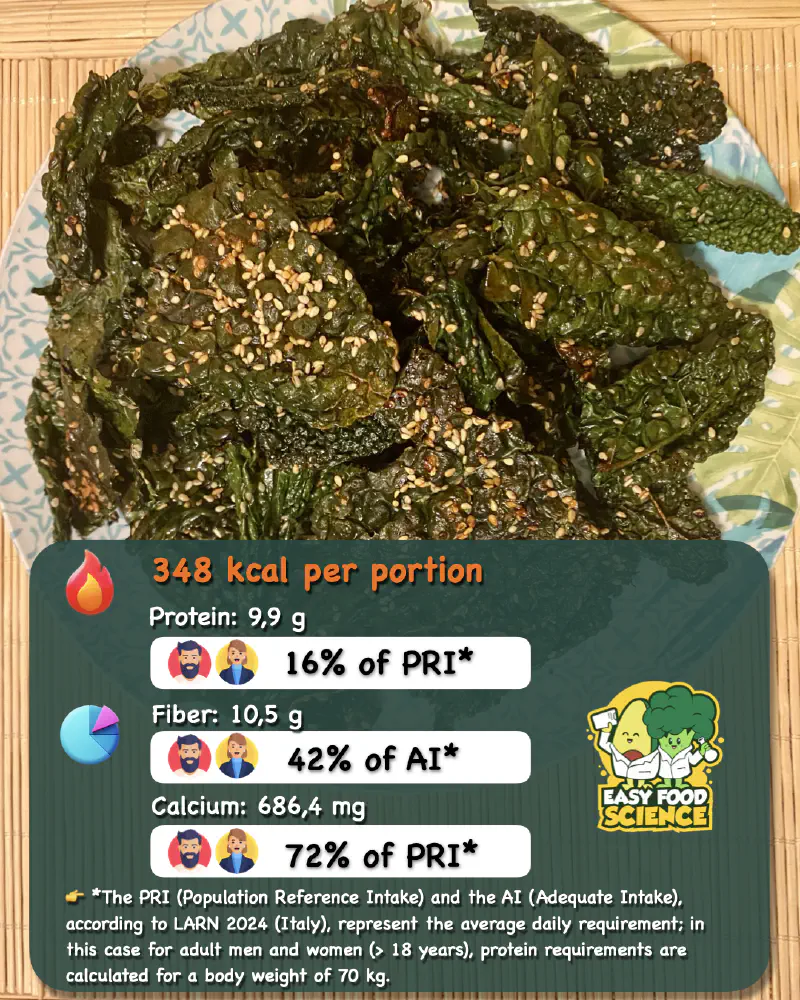
This recipe is particularly delicious but also very interesting from a nutritional standpoint: one serving covers the entire average daily requirement of vitamin C and about two-thirds of calcium, as well as providing a good amount of other minerals, vitamins, and fiber.
Additionally, kale, like all cruciferous vegetables (Brassicaceae family), contains glucosinolates that are converted into isothiocyanates, compounds known for their anticancer, anti-inflammatory, and antioxidant properties. Baking partially reduces the content of these compounds but doesn’t eliminate them completely, maintaining part of the nutritional benefits of raw kale.
Enjoy your meal!